
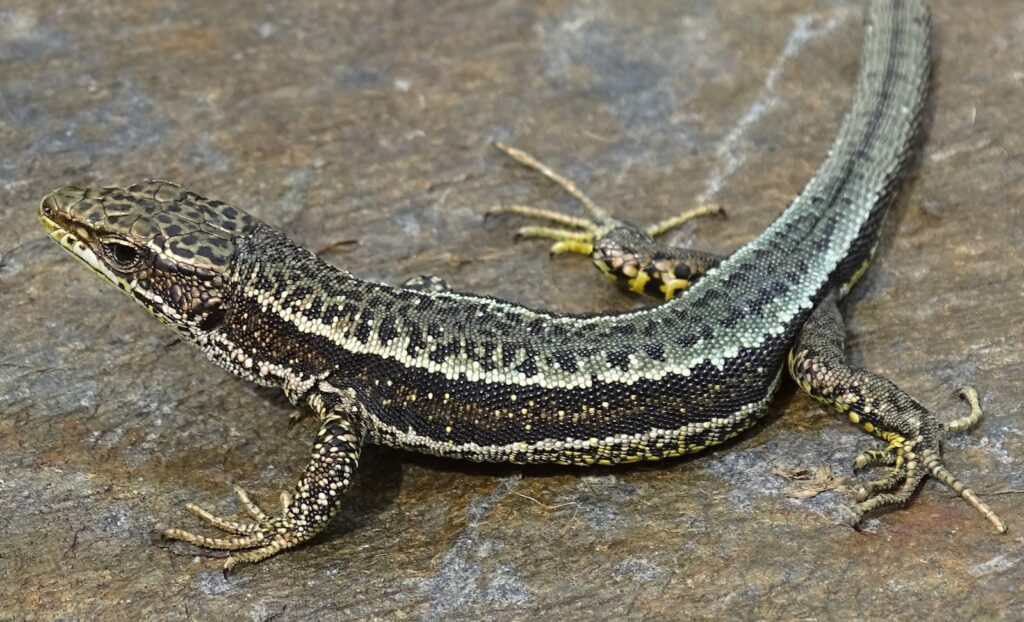
A new study led by the Institute of Evolutionary Biology (IBE, CSIC–Universitat Pompeu Fabra) and developed within the framework of the Catalan Initiative for the Earth Biogenome Project (CBP) provides a key genomic resource to understand the evolution, adaptation and conservation of mountain species. The work presents the first chromosome-level reference genome of Iberolacerta aurelioi (Aurelio’s rock lizard), an endemic and endangered lizard species from the Pyrenees.
The article, published in Molecular Phylogenetics and Evolution, combines structural genomics, phylogenomics and gene expression data to analyse the evolution of the genus Iberolacerta, a group of relict species inhabiting isolated mountain massifs across southwestern and central Europe.
Genomes to understand mountain adaptation
Species of Iberolacerta are highly specialized to live at high altitudes, which makes them particularly vulnerable to climate change. The new genome of I. aurelioi reveals how its genome has been deeply shaped by chromosomal fusions, resulting in a reduced number of chromosomes compared to closely related lizards. These structural rearrangements may have played an important role in the evolution and reproductive isolation of these species.
The study also identifies changes in the expression of hemoglobin genes, with increased expression of an isoform with higher oxygen affinity. This feature is interpreted as a key adaptation to high-altitude hypoxia and reinforces the idea that these lizards constitute an excellent model for studying genetic adaptation to extreme environments.
Using genomic resequencing data from all species and subspecies within the genus, the team reconstructed the evolutionary history of Iberolacerta. The results show an ancient diversification of the genus, predating the Pleistocene glacial cycles, evidence of genetic introgression among some species in the Iberian Peninsula, and strong demographic bottlenecks in alpine and Pyrenean species.
These latter taxa exhibit low levels of genetic diversity and a high burden of homozygosity, information that is particularly relevant for the conservation of endangered species such as Iberolacerta aurelioi. The reference genome generated therefore constitutes a fundamental tool for future management, monitoring and conservation actions.
The genus Iberolacerta has become a reference model for the study of key evolutionary processes in mountain environments, ranging from sex chromosome evolution to physiological adaptation to extreme conditions. In this context, the present work contributes to consolidating and testing previous hypotheses on the evolution of the genus, such as competitive exclusion associated with the genus Podarcis or the role of hypoxia as a limiting factor in some species.
The generation of a high-quality reference genome within the framework of the Catalan Initiative for the Earth Biogenome Project represents a decisive step forward in these research lines and provides the scientific community with a key resource for phylogenomic, genomic structure and genetic diversity studies. This knowledge reinforces the value of reference genomes as a foundation for systematics and for informed conservation of a genus of rock-dwelling lizards that is particularly vulnerable to global change.
Reference:
Talavera, A. et al. (2026). Lizards on a sky archipelago: Genomic approaches to the evolution of the mountain genus Iberolacerta. Molecular Phylogenetics and Evolution. DOI: 10.1016/j.ympev.2025.108527